Author: Dr.Louis George

  • 27 Photos and the Price of Sleep

    27 Photos and the Price of Sleep

    27 Photos and the Price of Sleep

    Spoke to a KSRTC bus driver today. He’s been having health issues the last few weeks.
    Losing consciousness without warning. That’s not exactly reassuring—for him, the passengers, or the other users of the road.

    The only pathological finding? Cervical spine disc disease on MRI.
    MRI brain? Normal.
    EEG? Normal.
    So the doctors tell him everything’s fine. Except for the spine. So now he’s here, in my OPD. Ortho OPD, for an evaluation of transient loss of cognition/consciousness

    He’s convinced that all his symptoms are due to the cervical spine. That’s what the neurologist said. That’s what the physician said.

    After a minor debate on the technical improbability of a cervical spine issue causing loss of consciousness or cognitive capacity without any change in neck position, I asked him a straightforward question-
    “How much sleep do you get?”

    One hour. Every 24-hour duty shift.
    And he does that three times a week.

    He’s not paid overtime. He can’t catch up on sleep during the rest days.
    Why does he work like this? Because if he follows the rules—assuming they exist—he won’t get to see his family frequently enough. It’s not convenient.
    So he finishes his week’s hours in two days. Then he disappears for the rest of the week. Smart, right?

    Or maybe not.
    Because the most likely diagnosis is staring us in the face. And no one’s looking.

    My problem is this:
    If a healthy young male is losing consciousness/cognitive capacity, while at work..
    Wouldn’t you start with his sleep schedule?
    Why is no one interested in his lifestyle, his work pattern? Or is it easier to just assume he’s pretending to be sick?

    To me, it reeks of a lack of curiosity. A lack of imagination. A complete disinterest in first principles thinking. The EEG is normal, so he’s fine. Is this medicine or public relations? He sleeps one hour a day. But the EEG is normal, so everything’s fine? How is this fine?

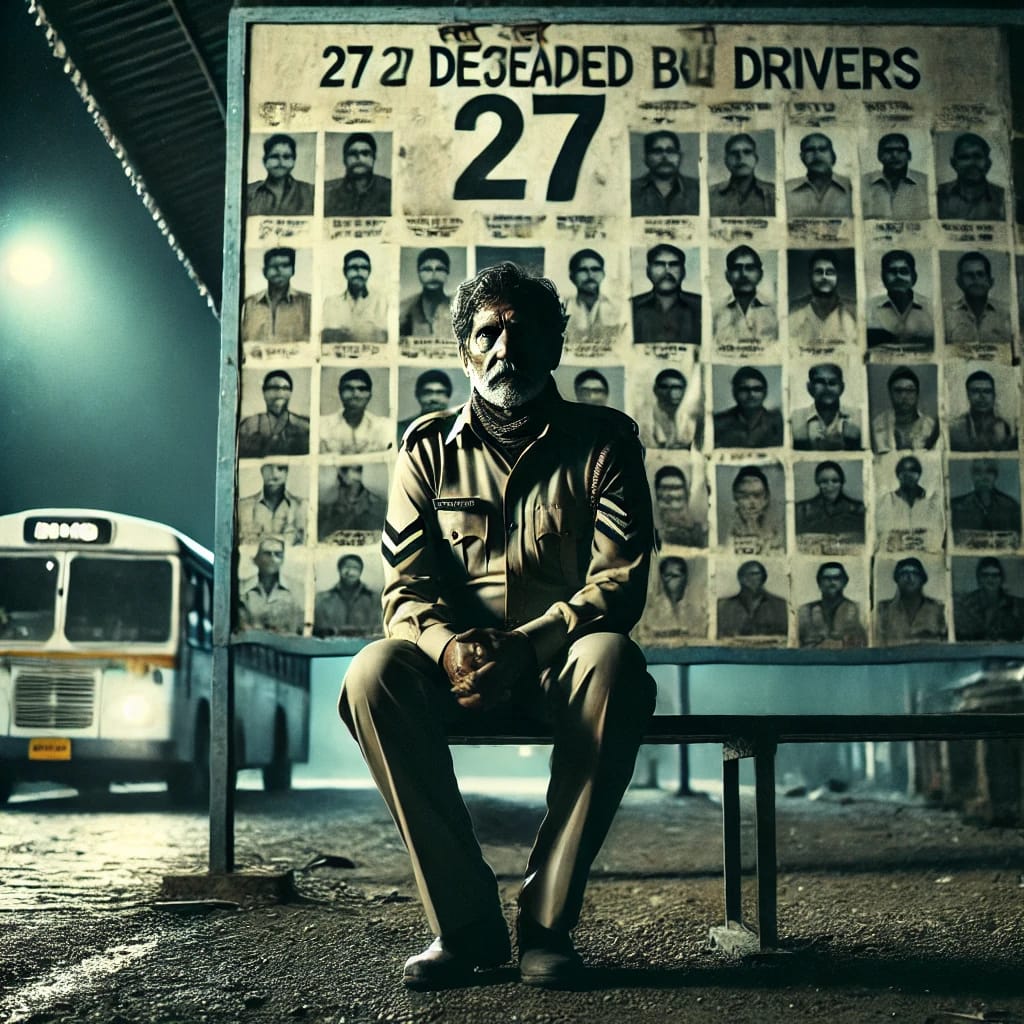
    He tells me there are 27 photos pasted on the wall of his workplace.
    All bus drivers. All like him.
    All dead.
    Since January this year.

    We look at each other. We smile. That bleak, resigned smile. Nothing’s going to change. Is it?

    People will keep pushing their bodies to the limit. Because they think they have no choice.
    It’s a gamble.
    They’re just hoping they survive.

    I don’t think he’s the only one with this problem. Most of my patients do not care enough about their sleep.
    I don’t drive at night anymore. It’s not worth the risk.

    I told him about the risks. He shrugged non committally. A man’s got to do, what a man’s got to do, that shrug said. And honestly, I wish I could’ve done more than just talk to him about the risks.

    The idealists will object here.
    “Doctor, you should have reported him. You should have put him on sick leave.”

    That’s not my style.

    I give people the information. I tell them my read of the situation. What they do with it, is up to them.

    He knows what he’s doing. His superiors know. His family knows. Everyone’s looking away.
    Until the bus climbs a divider, crashes into oncoming traffic, and then it becomes a tragedy.
    Photos, headlines, chest-beating.
    Then back to business as usual.

    Because life is cheap in India.
    Humans are throwaway resources. Human resources.
    And anyone who questions this setup?
    They’re asking for trouble.
    Ask me how I know.

    So I’m not here to start a crusade.
    But I do want to instill curiosity—in patients, in doctors, in anyone who cares to read.

    Asking the right questions about the basics—sleep, food, movement—often reveals more than the most advanced imaging.

    So here’s what I’d say:
    Go through the checklist

    1. Diet
    2. Sleep
    3. Exercise
    4. Work patterns and stress
    5. Relationships and stress
    6. Environment and toxin exposures

    You already know the questions. You already know the answers. You can even set up a rudimentary plan that hits the most high value targets in the above check list with the least possible effort. Run with it for a few weeks. See how you fare.

    You don’t have to wait for a health care professional to ask you the questions on the basics. Everyone knows that food, sleep and exercise are important. Go through that checklist yourself. Fix what you can, on your own. Make your own plan, then get it checked with your doctor, if you want. The doctor is best used as a troubleshooter when your initial plan isn’t producing the results you want. Simply abdicating all responsibility of your health to someone in a supposed position of authority, will only turn you into grist for the Pharma-medical complex. You turn into a statistic. A photo on the wall.
    How many more 27-photo walls do we need before we ask the obvious?

    You, are not a number. You are not a point on a graph. You are a human, you are supposed to have agency. Use it. You aren’t a diagnosis. You’re a decision-maker. Start acting like one.


  • Addiction

    Addiction

    When taking a medical history, we ask about cigarettes and alcohol. Sometimes, if the nicotine stains are obvious, we also ask about tobacco chewing. That doesn’t mean these are the only addictions that you should be concerned about in yourself and your loved ones. These are usually the most damaging. 

    Recreational drug use is also fast becoming common place these days, and some day, future doctors in India will start asking about cannabis, cocaine and LSD. I used to have to do that when I worked abroad. Didn’t think I’d have to restart doing that here in India. 

    Anyway, I’m rambling. I’m writing this to talk about cigarettes and alcohol, mainly, but what I say will apply to all sorts of addictive substances that are used these days. It applies to all addictions because I’m not going to talk about specific damage done by each substance. There are pages and pages of technical information about each individual poison that is available for free. You all know what’s written in those pages too. In spite of that knowledge you continue to destroy your own health. 

    So, it’s not a lack of Knowledge, that is causing you to destroy yourself. What is it then? 

    1. You think you’re indestructible

    This seems to be the main reasoning I see among my patients. You know you’re not. But you’re good at self deception, so you convince yourself, that you are. Somehow. You’re good at it. 

    2. It won’t happen to me. 

    This is a variant of the above. This is the gambler mentality. You do realise that you’re gambling with your life, and the well-being of your family (in case you kick the bucket) I don’t know about you, but that’s not something worth gambling with. 

    3.  “Life without _____ isn’t worth living “

    Most of my friends are fed up of my constant nagging and have now shifted to this camp. They tell me, that they understand the risks. They tell me that they know that they’re damaging themselves, but, they persist because they’re ok with damaging themselves in return for the pleasure they recieve from their addiction. Can’t really argue with that, except, asking them to consider their family, especially their children. I find it difficult to believe that they’d rather die for a few (thousand) cigarettes, than watch their children grow. How can one accept that sort of a fate? I don’t understand it. It doesn’t make sense. It won’t make sense to the addicts either, if they were really honest with themselves. 

    The other thing I’d like to tell this camp is that, I’ve seen people dying slowly and painfully for 15 years now. None of them tell me that they’re happy they smoked, in the past, while they’re gasping for breath, even on 100% oxygen through a face mask. Maybe that’s because they don’t have the breath to speak. 

    4. “We’re all going to die anyway” 

    There are many kinds of deaths. I’d like a good one. Painless, living my life to the full, and slipping away in my sleep, not even knowing that I’m about to die, sounds very good. 

    I’ll tell you what sounds bad. 

    COPD – not able to breathe, not able to sleep, dragging on for years before finally dying in an ICU, your lungs drowning in the stuff they make themselves, antibiotics and ventilator just prolonging the agony. 

    Cancer is easy (relatively) you go quick. You only suffer a few years. 

    Cardio vascular disease

    -strokes can leave you a vegetable unable to wash yourself after soiling your clothes and bed sheets. 

    -liver disease – you go quick, but it’s a nasty way to die. Swollen abdomen, endless needles, your mind gone, limbs weak. 

    It doesn’t make sense. The only reason that would make me accept the risk of a death like that, is, if my destructive lifestyle was absolutely essential to making my children’s life better. I wouldn’t do it for cigarettes, alcohol or designer drugs. 

    This is just an emotional appeal. The guilt of living while thinking that I could have saved someone by being a bit more forceful in my advice, is awful. 

    I’ve lost some friends before I got to do all the things I wanted to do with them. Call me selfish. There’s one guy who haunts me everyday. He was so full of life. Someone I wanted to emulate. Someone who inspired me and everyone around him. If it sounds like a “Bromance” I’d say, yes it was. I kept quiet because I didn’t want to risk him avoiding me, with  my constant nagging on cigarettes. A few months after I nagged him for the last time, where he politely let me know that I risked losing his friendship, he was gone. Dead from his first (and massive) heart attack. Far away from home. In a strange place surrounded by strangers. It broke my heart. And if this is the way I feel about losing a friend who I’ve interacted with face to face for only a few dozen hours, Can you imagine what his family has gone through?

    Is that cigarette worth it? 

    I kept quiet so that I wouldn’t lose him, and fate took him away. 

    This incident shook me up quite a bit and it is this incident that shapes my present behaviour towards the people I care about. 

    It will hurt, if you avoid me because I’m nagging you about your cigarettes, but it won’t hurt me as bad as feeling that I should have done more to stop you.

  • Your Light Environment

    Your Light Environment

    As diurnal mammals, humans are meant to spend most of our waking hours outdoors. That’s what our biology is designed for. Sunlight and shade. Receiving either full spectrum solar radiation from visible and invisible wavelengths.

    What this means, qualitatively, is -A good dose of UV light on our bare skin through the hours between 9am to 4pm. A massive amount of full spectrum visible light through our eyes between 6 am and 6pm, and a steady drip feed of low intensity infra red light on our skin, throughout the day between 6am and 6pm.

    The UV light exposure required for most people is around 10-15 minutes a week. On a bare torso. That’s quite an easy target to hit. That number is based on the bare minimum required to synthesize enough vitamin D to keep one out of deficiency. You’ll need more if you’re stressed or unhealthy to begin with. You’ll also need more time in the sun if you’re clothed, or if you have darker skin

    The visible spectrum light is possibly the most important one, when it comes to fixing circadian rhythm. Of all the body parts, the eyes are the most sensitive and discerning when it comes to light. In natural lighting, most of this is scattered light that is reflected off of objects around us. Before we started using phones and computer screens, this light did not have the dominance of blue, the way we have today. The light from these screens maybe low intensity, compared to the ambient light outdoors, but the duration, proximity and focus we have on these screens in a regular day, will overdose you, quite easily. And that’s obviously not a good thing, in case you needed me to spell it out.

    Infra red radiation from our surroundings is far less perceivable, but of enormous significance. Infra red, especially in the 650-850 nm range tends to be very beneficial for mitochondrial health. Exposure to these wavelengths improves energy production, and reduces oxidative stress at a cellular level. This means, better metabolic markers like blood glucose. Solar infra red is present at all times during daylight hours, and as it gets hotter, the amount in the environment goes up. It penetrates far more than visible and ultra violet radiation. Therefore, it lights up your insides, literally. Bones, intestines and solid organs even.

    Our current lifestyle, indoors, gives us

    • very little UV
    • too much blue in the visible spectrum-
    • and too little infra red.

    This leads to- a perpetual “winter” being sensed by your body

    • making you hungry,
    • making you tired and less energetic
    • with poor impulse control
    • low sex hormone levels
    • reduced metabolic flexibility,
    • diseases like diabetes, hyperlipidaemia and high blood pressure

    Fixing the light environment is the easiest thing you can do.

    Far easier than fixing your diet, or getting to the gym. I’m not saying those aren’t important. I’m saying that exercising, eating well and getting healthy becomes less of an uphill struggle, if you can fix your light environment.

    All of the above is just a short primer on what to do with your light environment. What you do in the day. The night, is just as important. Darkness at night is missing from our lives too. That will be the topic of another post.

    How many doctors does it take to change a light bulb?

    Well, let’s see… One to diagnose the bulb as “non-illuminatory,” another to prescribe a replacement, a third to bill your insurance for the procedure, and a fourth to tell you it’s not covered because it’s a “pre-existing darkness condition.” So, I’d say about four—unless it’s a specialist bulb, then you’re looking at a whole team and a six-month wait for the appointment! What do you think—should we call in a surgeon for the extraction?

    Or, you could just go out and change them yourself. If you’re interested in learning how, let me know in the comments. Ask your questions.

  • Thiamine Deficiency: The Hidden Disorder Affecting Multiple Body Systems

    Thiamine Deficiency: The Hidden Disorder Affecting Multiple Body Systems

    Thiamine, also known as Vitamin B1, plays a crucial role in cellular energy production throughout our body. While its importance is well established, thiamine deficiency is usually diagnosed very late, due to its diverse and sometimes subtle manifestations. I’ve spoken briefly about the topic before, on a video. I’m repeating the topic again, because it doesn’t get the importance of deserves.

    https://youtu.be/ESRpmX_TfF8?si=cCQ06-0GbGMdZK-n

    The Fundamental Role of Thiamine

    Thiamine is central to energy processing in every cell of our body. Because of this universal requirement, a deficiency can manifest in numerous ways, with the most energy-demanding tissues showing symptoms first. Usually. Think of thiamine as the key that unlocks cellular energy production – without it, our cells struggle to function efficiently.

    How Thiamine Deficiency Affects Different Body Systems

    The brain, being one of the most energy-hungry organs, is particularly vulnerable to thiamine deficiency. Symptoms can include:- Cognitive impairment or “brain fog”- Memory problems due to hippocampus dysfunction- Mood swings and personality changes linked to limbic system effects- Brainstem issues affecting blood pressure and circulation

    The effects extend beyond the brain to other body systems too

    Cardiovascular: Heart enlargement and potential cardiac failure, a predisposition to arrhythmia due to dysfunction in both the heart muscle, and the nerves controlling the electrical activity of the heart. –

    Peripheral Nerves: Tingling sensations, numbness and reduced nerve function. Part of these symptoms are also due to loss of the myelin sheath of nerves. –

    Muscular System: Post-exercise fatigue and persistent soreness, similar to symptoms seen in Fibromyalgia and chronic fatigue syndrome-

    Skin: Various issues including scaling, dandruff, acne, and dry skin-

    Immune System: Both overactivity (leading to autoimmune conditions) and underactivity (increasing infection risk)-

    Digestive System: Slowed motility and irritable bowel symptoms-

    Thyroid Function: Typically presenting as hypothyroidism

    Understanding Thiamine Balance Thiamine levels in our body operate like a bank account. While some B1 can be synthesized by gut bacteria, our primary source remains dietary intake. This pool is constantly being depleted by:

    • Carbohydrate and fat metabolism
    • Protein and enzyme synthesis
    • Detoxification processes
    • Methylation pathways

    Factors That Deplete Thiamine

    Several common lifestyle factors can significantly impact thiamine levels:

    • Physical, mental and emotional stress
    • Environmental toxins
    • Processed food consumption
    • Coffee and alcohol intake
    • Many common medications

    Eight Steps to Improve Thiamine Status

    1. Increase consumption of fresh, natural foods

    2. Minimize processed foods, especially refined flour and sugar

    3. Reduce smoking, alcohol, coffee, and tea.

    4. Focus on digestive health to enhance absorption

    5. Consider appropriate supplementation

    6. Implement comprehensive stress management strategies, not just the mental, which is what most people think of, when they think of stress.

    7. Address any bacterial or fungal overgrowth in the gut.

    8. Maintain balanced energy intake and expenditure

    Thiamine deficiency is widespread, but unrecognised, and the solutions are easy to implement, with next to no side effects, if done slow and steady.

    The information above, is meant to empower you. Read up more on the topic and make your own changes. Some of the above will need medical supervision, but getting started is easy. You just need to take the first steps

  • Understanding why your cholesterol is high

    Understanding why your cholesterol is high


    Many people panic when diagnosed with high cholesterol, often jumping to conclusions about their diet being the culprit. As a healthcare provider, I frequently encounter patients who blame their weekly serving of meat for their elevated cholesterol levels. Even more puzzling are the vegetarians with high cholesterol – it becomes clear that the relationship between diet and blood cholesterol isn’t as straightforward as commonly believed.

    Research has shown that dietary cholesterol doesn’t reliably correlate with blood cholesterol levels.
    The list I’ve compiled below, talks about the less frequently considered factors that might be affecting your cholesterol:

    ## Caloric and Macronutrient Imbalances

    The modern diet, particularly its heavy reliance on grains and grain-based foods, often leads to excessive carbohydrate consumption. While many patients have already reduced their fat intake following conventional wisdom, their cholesterol levels remain stubbornly high. This suggests that the issue might lie more with overall caloric intake and macronutrient balance rather than specific food groups.

    ## Thyroid Function

    Even before laboratory tests show abnormalities, your thyroid might be struggling. Watch for these warning signs:
    – Feeling consistently cold, even in warm weather
    – Reduced sweating
    – Menstrual irregularities or decreased libido
    – Dry skin
    – Thinning hair and eyebrows
    A “normal” TSH level doesn’t guarantee that your tissues are receiving enough tri iodothyronine. And, each organ and tissue thrives at different levels of hormone.

    ## Digestive Health

    Constipation, often an early sign of thyroid dysfunction, can directly impact cholesterol levels through inflammation and increased gut permeability (leaky gut). This creates a cycle where digestive issues contribute to and are exacerbated by metabolic imbalances.

    ## Sleep and Light Exposure

    Modern life has disrupted our natural rhythms in several ways:
    – Irregular sleep patterns intensify stress responses
    – Evening exposure to blue light from electronic devices and LED lighting affects hormonal balance
    – Insufficient natural sunlight and UV exposure leads to vitamin D deficiency and hormonal imbalances

    ## Stress Management

    In today’s world, stress is nearly universal. Our bodies respond to stress by mobilizing energy resources, including visceral fat. However, since modern stressors are primarily psychological rather than physical, this mobilized energy circulates in our bloodstream as lipoproteins and elevated blood sugar, rather than being utilized for physical activity.

    ## Nutritional Deficiencies

    Your liver needs specific nutrients, particularly B-complex vitamins and trace elements, to process daily energy intake effectively. These deficiencies are particularly common among those who rely heavily on processed foods.

    ## Exercise Patterns

    Physical activity affects cholesterol levels in complex ways:
    – Excessive high-intensity cardio without adequate recovery can increase stress responses
    – Insufficient low-intensity activities like walking or cycling
    – Inadequate strength training and reduced muscle mass

    Each of these factors interacts with the others, creating a complex web of influences on cholesterol metabolism. Rather than becoming overwhelmed by trying to perfect every aspect, focus on addressing the basics first and building momentum toward better health.

    Understanding these diverse factors helps explain why managing cholesterol isn’t as simple as cutting out certain foods. A holistic approach that considers lifestyle, stress, sleep, and exercise often proves more effective than focusing solely on dietary changes.

  • Chronic pain is partly, a memory.

    Chronic pain is partly, a memory.

    Memories can be good or bad. I don’t mean in the sense of the the emotions they contain. I mean in the sense that they have an effect on how those memories let you process your life. How it frames your future.

    Good memories will let you move forward. Bad memories will hold you back. Any memory can be a “good” memory, if you can learn the lesson it is trying to teach you. It need not necessarily be the lesson you “want” to learn.

    Chronic pain is memory. The pain, can be physical or spiritual. The solution is to learn from it. Not, relive it. If you’re being forced to relive it, that’s because you’ve not learnt from it.

    People deal with painful memories by locking them away, hiding them under alcohol, by distracting themselves with the frivolous, or by avoiding triggers.

    People deal with chronic physical pain the same way. Locking down parts of the body that hurt and then completely forgetting about it, because the lockdown is so effective(temporarily). By distracting themselves with life, work and relationships. By drowning the pain with painkillers, drugs and alcohol. And by avoiding getting into situations that they initially remember as having caused their pain.

    The coping mechanisms for chronic musculoskeletal pain and mental suffering are the same. They are the same, because the brain/body responds to them the same way.

    You may think that’s a bad thing. I think it provides opportunities. What works on the body will have a closely corresponding analogy that works on the mind and vice versa. Separating the mind from the body was a stupid idea anyway.

    Right. So now, you’re saying- Screw philosophy! Tell me how to get rid of the damn pain!

    You’ve not learnt the lesson, young padwan. Pain is your teacher and you need to learn. Pain is a very patient teacher and will wait with you, life long, till you learn(or die) Kind of like that Tom Cruise starrer ” Edge of tomorrow”. Live. Die. Repeat. Every morning you wake up from dreamland, you’re getting another stab at the mission. Use it well, and you’ll make progress day by day.

    You can have someone showing you the ropes. But at some point you’re going to have to cut them loose and move forward on your own, if the monster is the big one. The further you progress in the game, the more alone you’ll be. And at some point, you’ll be the one showing the tricks to the grasshoppers.

    Anyway, here are a few ropes.

    1. If there’s a locked range of motion, try to bring it back. Don’t kick the door down. Pick the lock. Take it slow. Lubricate the hinges. If you want a literal explanation- repeated conscious, mindful movement. Also, learn breath control(lock picking)

    2. Don’t distract yourself with “stuff”. If you know there’s a problem somewhere, don’t bury it. Go after it. I’m not saying put your life on hold. I’m saying let your efforts at pain resolution continue, while life continues. Make the pain a part of your life. Please note that I didn’t it call it pain “management”. I despise “managers”

    3. Painkillers, alcohol and drugs- for chronic pain? You choose. But make sure you’ve tried everything else. These are acts of desperation.

    4. Train yourself to deal with the situation that caused the pain the first time. Become stronger. Become more aware of your body mechanics, so that you can push yourself to the limit and back off just before you break. Avoiding triggers will not help you do that. Be prepared for injury. But don’t go asking for it.

    Memories can be strengthened or made to fade away. Holding on to painful memories is a good way to stay in pain. Pain has a memory component too. You can process it and let it fade away, naturally. Or you can numb it and ignore it, temporarily and be unpleasantly suprised when it pops up at the least opportune moment. What will you choose?

  • Using movement to heal chronic pain

    Using movement to heal chronic pain

    The default setting of a human (or any other organism for that matter) is health. That’s the premise I start from. Ill health or disease is a signal that you’ve moved away from your default state. Listen to that signal and take action (not drugs). Getting back to that default state is what the body wants. And that is what it will do, if you remove the roadblocks.

    The usual roadblocks that I talk about are diet and sleep, because they are easy to describe in text form. Movement can’t be described in text. It can be demonstrated on video, but it needs to be experienced to be really understood. Monkey see, monkey do. 

    However, there’s another layer of complexity/complication that gets added on. What I demonstrate might not be what you ultimately perform. In your mind it might look like you’re mirroring the movement perfectly. However usually there’s something missing or something extra.

    The missing and extra stuff come from your past physical literacy, your regular habits, your posture, your mental state on the day you’re doing these exercises, or even what you’ve eaten the day before. Your fears about the movement. Your own perception of what your body is capable of. This layer, is something I can’t fix to satisfaction, on my own. It needs work on your part. Honestly speaking, it is not something I should be fixing on my own. Your body and all the complexities described above are unique to you. I can only show you the basic default patterns that I’m familiar with. You’ll have to adapt that pattern for yourself. It might not be vastly different from the basic pattern, that’s where I (we) win. In order to be able to make the adaptations to the basic movement pattern, you need to be able to try it. To want to try it. To practice it for countless hours, till you become an expert at the version that *your* body needs.

    The other major roadblock in your path to healing is the dysfunctional movement pattern that had been used to manage your pain, asymmetry, fears, anxieties and lack of mobility/strength/ stability. That’s what I really wanted to talk about in this post, but the intro leading up to it, became a full sized post all on it’s own.

    The dysfunctional patterns that have helped you cope so far, are also what is keeping your pain chronic.

    That needs to be reset.

    That is what movement should do. It should reset your nervous and musculoskeletal system back to default on a daily basis, to keep you healthy in spite of the stresses and strains of your daily life.

    It should reset your patterns and get you as close to default as possible. The closer to default you get, the faster you will progress. You will trigger a vicious cycle of healing.

    How can you use movement to reset your patterns?

    3 basic principles

    1. Diaphragmatic breathing

    2. Cross pattern, quadruped movements,Movement that crosses the midline

    3. Triggering propriceptive inputs

    Each of these basic points need further elaboration. 1 book each maybe.

    Will try and post later in detail, as and when inspiration strikes.

    In the meantime, use Google to find out more about the jargon I’ve posted here. Ask questions after doing your homework. Maybe you’ll keep me interested enough, to keep posting.

    The three points listed above, I stole from this video link posted below. I’ve been using these for years on my patients but I hadn’t been able to boil it down to basics and put it into coherent words like this guy has. 

    Thanks to the patient who triggered my search yesterday evening and made me find this channel on YouTube.

  • Self care

    Self care

    Self care is glamorised and turned into a consumer event by social media. Spending money is touted as the only way to “perform” self care. It is true to an extent. In today’s world, one has to spend money to breathe fresh air, or sit still, or even look at a sunset.

    Self care is now a luxury, that no one can afford. Even the rich people. Because they don’t know, how to look after themselves, without spending money.

    The ones that look after themselves are the ones that have a strong sense of self worth.

    Today’s audio segment is about people who don’t have that sense of self worth, therefore tend to sacrifice themselves looking after people or organisations that will thoughtlessly throw them under the bus, once they are no longer useful. These are people who are unaware of what is coming for them in the future, but can be saved, if you manage to get through to them.

    They are already good at looking after people, so they’ll do well, when they start looking after themselves. These are also the people society runs on. Improving their lot, will improve society as a whole.

    These are just my thoughts on how to get through to them. I would like to hear your opinions on the same.

    Self care