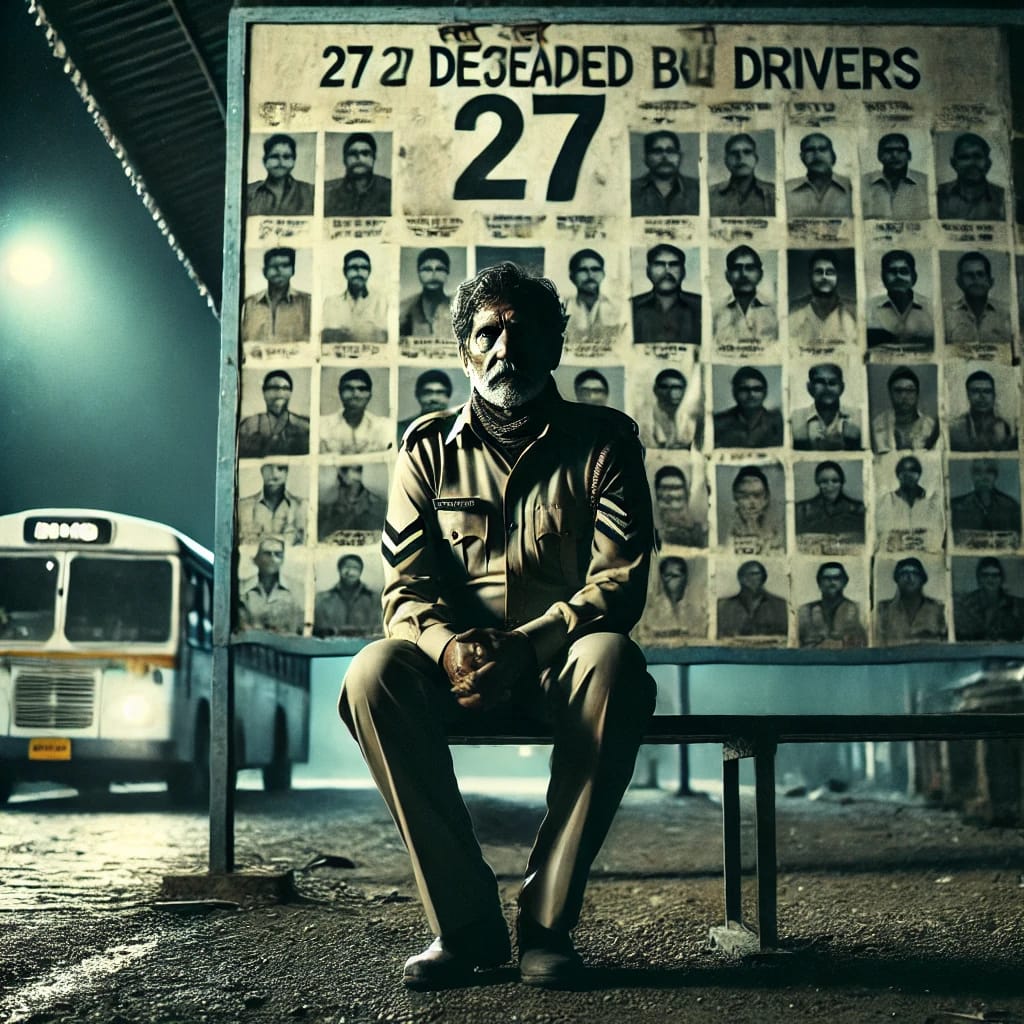
27 Photos and the Price of Sleep
Spoke to a KSRTC bus driver today. He’s been having health issues the last few weeks.
Losing consciousness without warning. That’s not exactly reassuring—for him, the passengers, or the other users of the road.
The only pathological finding? Cervical spine disc disease on MRI.
MRI brain? Normal.
EEG? Normal.
So the doctors tell him everything’s fine. Except for the spine. So now he’s here, in my OPD. Ortho OPD, for an evaluation of transient loss of cognition/consciousness
He’s convinced that all his symptoms are due to the cervical spine. That’s what the neurologist said. That’s what the physician said.
After a minor debate on the technical improbability of a cervical spine issue causing loss of consciousness or cognitive capacity without any change in neck position, I asked him a straightforward question-
“How much sleep do you get?”
One hour. Every 24-hour duty shift.
And he does that three times a week.
He’s not paid overtime. He can’t catch up on sleep during the rest days.
Why does he work like this? Because if he follows the rules—assuming they exist—he won’t get to see his family frequently enough. It’s not convenient.
So he finishes his week’s hours in two days. Then he disappears for the rest of the week. Smart, right?
Or maybe not.
Because the most likely diagnosis is staring us in the face. And no one’s looking.
My problem is this:
If a healthy young male is losing consciousness/cognitive capacity, while at work..
Wouldn’t you start with his sleep schedule?
Why is no one interested in his lifestyle, his work pattern? Or is it easier to just assume he’s pretending to be sick?
To me, it reeks of a lack of curiosity. A lack of imagination. A complete disinterest in first principles thinking. The EEG is normal, so he’s fine. Is this medicine or public relations? He sleeps one hour a day. But the EEG is normal, so everything’s fine? How is this fine?
He tells me there are 27 photos pasted on the wall of his workplace.
All bus drivers. All like him.
All dead.
Since January this year.
We look at each other. We smile. That bleak, resigned smile. Nothing’s going to change. Is it?
People will keep pushing their bodies to the limit. Because they think they have no choice.
It’s a gamble.
They’re just hoping they survive.
I don’t think he’s the only one with this problem. Most of my patients do not care enough about their sleep.
I don’t drive at night anymore. It’s not worth the risk.
I told him about the risks. He shrugged non committally. A man’s got to do, what a man’s got to do, that shrug said. And honestly, I wish I could’ve done more than just talk to him about the risks.
The idealists will object here.
“Doctor, you should have reported him. You should have put him on sick leave.”
That’s not my style.
I give people the information. I tell them my read of the situation. What they do with it, is up to them.
He knows what he’s doing. His superiors know. His family knows. Everyone’s looking away.
Until the bus climbs a divider, crashes into oncoming traffic, and then it becomes a tragedy.
Photos, headlines, chest-beating.
Then back to business as usual.
Because life is cheap in India.
Humans are throwaway resources. Human resources.
And anyone who questions this setup?
They’re asking for trouble.
Ask me how I know.
So I’m not here to start a crusade.
But I do want to instill curiosity—in patients, in doctors, in anyone who cares to read.
Asking the right questions about the basics—sleep, food, movement—often reveals more than the most advanced imaging.
So here’s what I’d say:
Go through the checklist
- Diet
- Sleep
- Exercise
- Work patterns and stress
- Relationships and stress
- Environment and toxin exposures
You already know the questions. You already know the answers. You can even set up a rudimentary plan that hits the most high value targets in the above check list with the least possible effort. Run with it for a few weeks. See how you fare.
You don’t have to wait for a health care professional to ask you the questions on the basics. Everyone knows that food, sleep and exercise are important. Go through that checklist yourself. Fix what you can, on your own. Make your own plan, then get it checked with your doctor, if you want. The doctor is best used as a troubleshooter when your initial plan isn’t producing the results you want. Simply abdicating all responsibility of your health to someone in a supposed position of authority, will only turn you into grist for the Pharma-medical complex. You turn into a statistic. A photo on the wall.
How many more 27-photo walls do we need before we ask the obvious?
You, are not a number. You are not a point on a graph. You are a human, you are supposed to have agency. Use it. You aren’t a diagnosis. You’re a decision-maker. Start acting like one.
 Dr. Louis George
Leave a comment